HREPA's Young Haitian Real Estate Academy celebrates its first Graduating Class
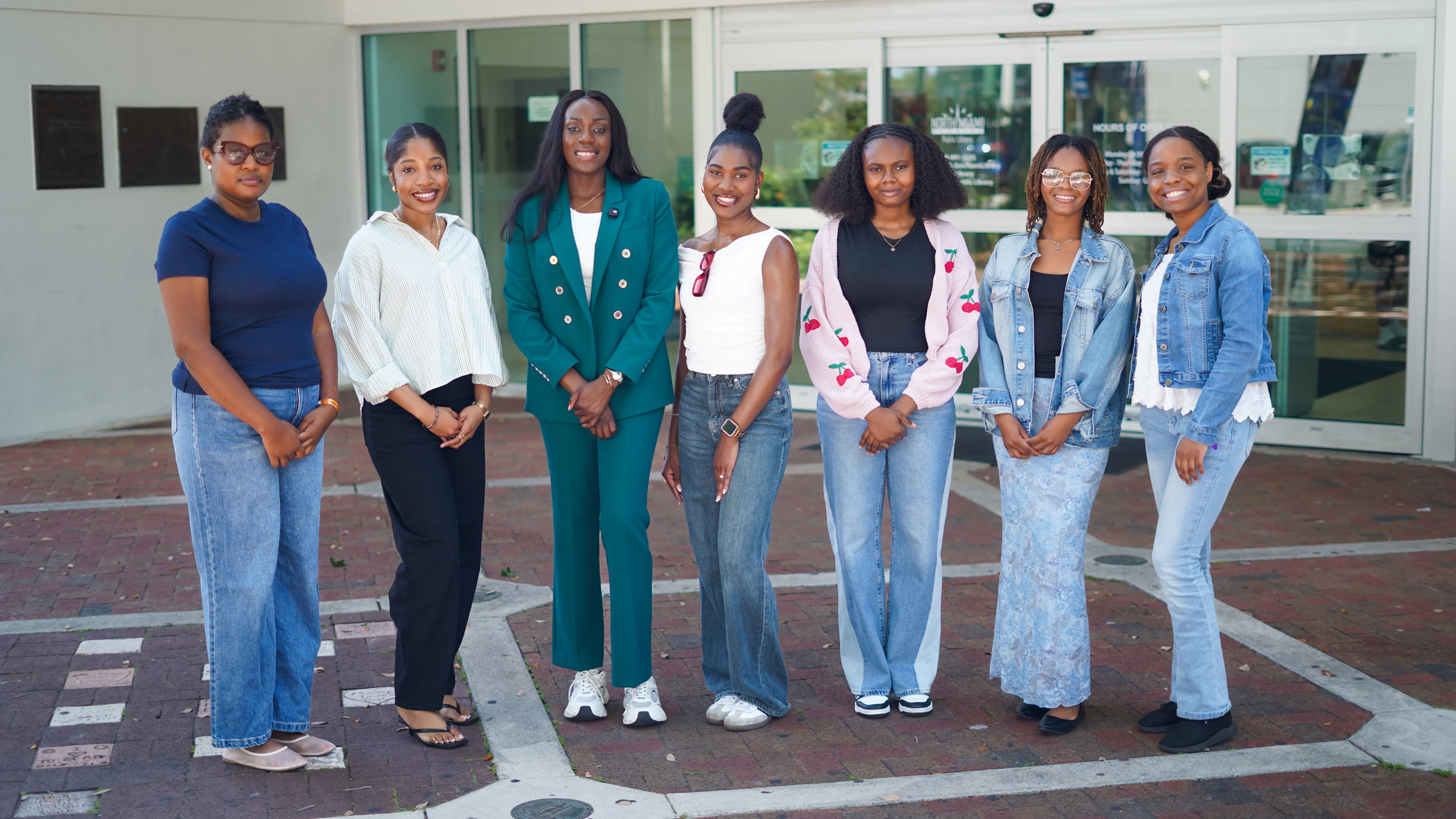
The reconstruction of Haiti will not necessarily begin the day the first stones of a new building, a new road, or a new neighborhood are laid. It can begin much earlier, with the training of the women and men who will, in the future, design, finance, build, manage, protect, and develop these investments.
This is precisely the bet of the Academy of Young Haitians in Real Estate, an initiative of the Haitian Real Estate Professionals Association (HREPA), which will celebrate, on Saturday, August 15, 2026, the graduation of its very first cohort after twelve weeks of training, mentoring and practical experience.
Behind this ceremony lies a broader ambition: to prepare a new generation of professionals from the Haitian diaspora, capable of succeeding in the North American real estate industry, but also, in the longer term, to create a pool of skills that can contribute to the development and reconstruction of Haiti.
“That’s the power of this program,” says Tracy Vertus, founder of the Academy and co-founder and president of HREPA. “We want to show young people that they can enter a program as students and emerge with skills, networks, career prospects, and a much broader vision of what they can achieve. Now imagine what can happen if we create these same opportunities for hundreds, then thousands, of young Haitians.”
This reconstruction cannot be reduced to the mobilization of capital or the construction of infrastructure. Above all, it will require skills.
We will need real estate developers, engineers, architects, project managers, financing specialists, real estate lawyers, appraisers, inspectors, contractors, electricians, accountants, managers and investors.
It is this overall concept that HREPA seeks to convey to the participants of its Academy.
“We often talk about rebuilding Haiti in terms of buildings, roads, housing, and investments. But before we rebuild the infrastructure, we also need to build the human skills necessary to do it,” explains Tracy Vertus.
The idea is based on a simple truth: it would be too late to wait for major reconstruction projects to begin before looking for the professionals capable of carrying them out. These skills must be identified, supported, and developed now.
A first cohort of pioneers
Launched in May 2026, the Academy received 38 applications from high school and college students from 13 communities in the United States and Canada.
The program is not limited to the real estate agent profession. Its curriculum notably covers mortgage financing, residential and commercial real estate, investment, property management, real estate law, appraisal, inspection, construction, specialized trades, accounting, business management and entrepreneurship.
“It’s not just about having people to sell properties,” Vertus points out. “It’s about having people to finance them, build them, inspect them, manage them, protect them legally, and develop them.”
This approach allows participants to discover real estate as a true economic ecosystem. Behind a house, a building, or a development project lies a chain of complementary professions, each representing an opportunity for career advancement, entrepreneurship, and wealth creation.
From knowledge to experience
The Academy also wanted to move beyond purely theoretical or virtual teaching.
Participants notably visited Canvas Real Estate in South Florida to observe the daily operations of a real estate company and to better understand the realities of the industry.
During the twelve weeks of training, they benefited from the voluntary support of many professionals from different sectors: Tracy Vertus, Sheila Dorceus, Laurie Joseph, Judy Cazeau, Carl Christian, Midlaine Pean, Jude Avril, Carlos Fong, Josemon Avril, Alisha Moriceau, Djemcy Limage, Watson Joseph, Nathalie Demesmin and Davidson Levasseur.
Real estate agents, brokers, financing specialists, appraisers, inspectors, project managers, contractors, electricians, lawyers and accountants have thus enabled young people to understand that real estate does not represent a single profession, but a set of interdependent professions.
This diversity is in fact one of the strengths of the project: allowing each participant to discover the professional space that best matches their skills and ambitions.
The Haitian diaspora is often mentioned for its economic weight and for the financial transfers it makes to Haiti. But its human capital is just as considerable.
Thousands of young people of Haitian origin are growing up today in the United States, Canada, and elsewhere. They attend universities, learn trades, join companies, obtain professional licenses, develop networks, and accumulate experience in sectors that Haiti will inevitably need.
The challenge, therefore, is to gradually create mechanisms to transform this human capital of the diaspora into a force for development.
The presence, at the graduation ceremony, of a keynote speaker directly involved in the development of the real estate sector in Haiti will symbolize this desire to create a bridge between professionals in the diaspora and the future needs of the country.
HREPA’s vision can be summarized around a trajectory: discovery, education, mentorship, professional training, experience, leadership, entrepreneurship, investment and ownership.
The objective therefore goes far beyond the search for a first job. It is about contributing to the gradual training of professionals, entrepreneurs, investors, owners and decision-makers.
Prepare today those who will build tomorrow
The first cohort of the Academy thus represents less of an end point than a starting point.
By enabling young Haitians to understand the mechanisms of real estate, finance, construction and investment, HREPA poses an essential question: what if the preparation for the reconstruction of Haiti began today, within its diaspora itself?
Because the reconstruction of a country does not depend solely on the availability of capital. It also depends on a society’s ability to mobilize skills, knowledge, networks, entrepreneurs, and a new generation of professionals.
Graduation of the class of 2026
The ceremony will be held on Saturday, August 15, 2026, from 9 a.m. to 11 a.m. Eastern Time , online and will be open to the public.
It will include presentations of student projects, testimonials, a speech by the keynote speaker, the announcement of scholarships and professional opportunities, a recap video, and the awarding of certificates.
About HREPA
The Haitian Real Estate Professionals Association (HREPA) is a non-profit organization that connects, develops and empowers Haitian real estate professionals, while promoting access to education, professional development, entrepreneurship and wealth creation opportunities.
- Eveline François
Chair, Communications and Marketing
HREPA
“Rebuilding a country doesn’t begin with capital alone. It begins with competent people,” concludes Tracy Vertus. “The Haitian Youth Real Estate Academy is just the beginning. We are building a movement.”