Haitian filmmakers Rachelle Salnave and Feguenson Hermogène honored at FIFAC
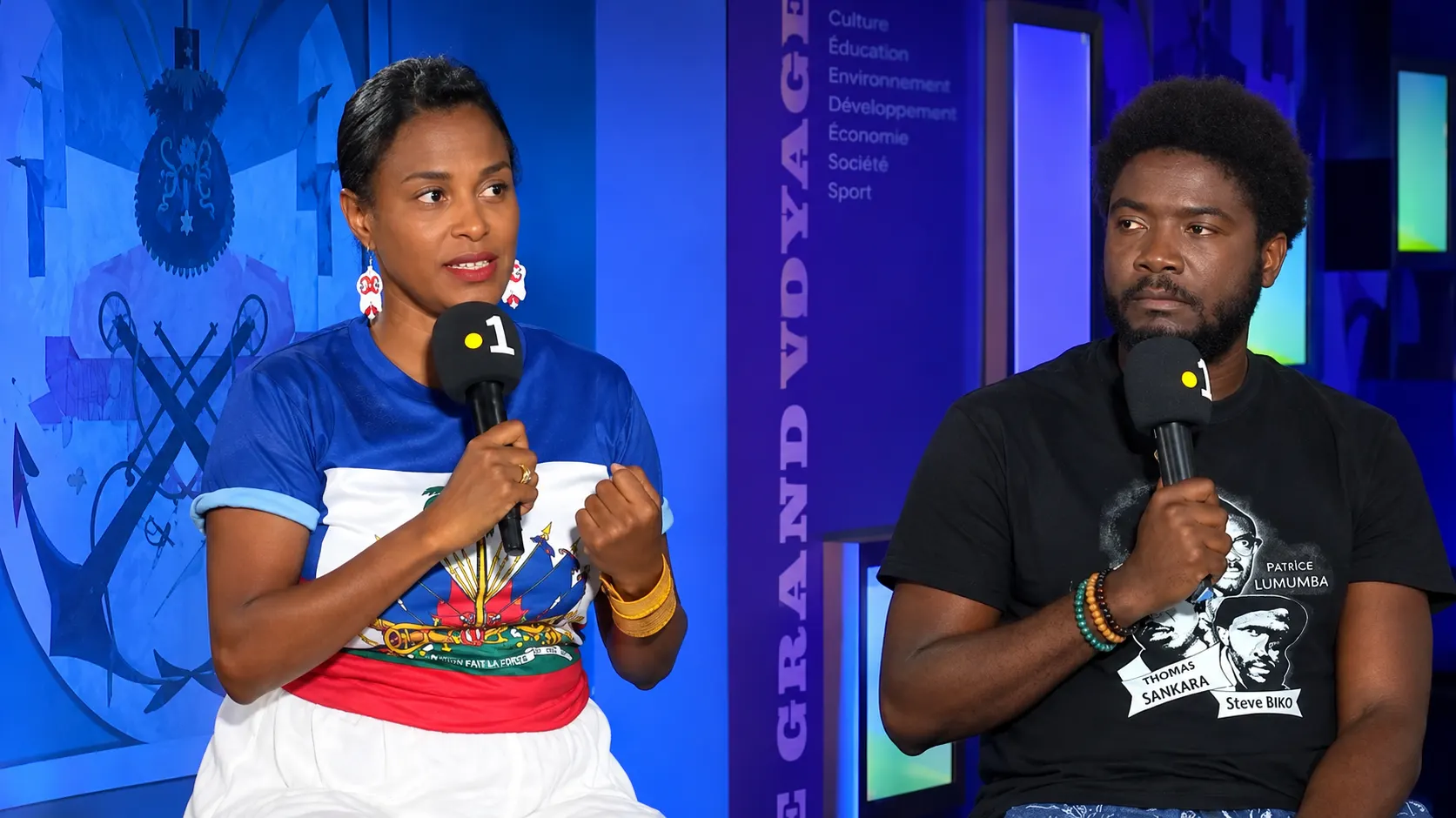
Two Haitian filmmakers were among the winners at the 8th Amazonia-Caribbean International Documentary Film Festival (FIFAC), which ended Oct. 10 in Saint-Laurent-du-Maroni, French Guiana.
Rachelle Salnave won a special jury mention for her feature “Double Citoyen” while Feguenson Hermogène took three honors: a special jury mention and the high school jury prize for his feature “Résurgence,” and the best short film prize for “Nan Ginen.”
A father, a daughter and a passport
In “Double Citoyen”, Salnave follows her father, Édouard Salnave, as they test the 2012 amendment to Haiti’s constitution that allows dual nationality. The process proves harder than expected. Édouard, a committed Republican from New York, has not set foot in Haiti in more than 50 years. To help his daughter reclaim her Haitian citizenship, he must first become Haitian again, which forces him back toward a country his family left during political exile in the 1960s.
The festival describes the 75-minute film as both a father-daughter road movie and a reflection on living with two national identities. The movie was produced in the United States and Haiti and had screened earlier this year at the Miami Film Festival.
The haitian filmmaker Salnave is not a new face in the industry. She has more than 20 years in film. Her earlier documentaries have examined gentrification in Harlem, the experience of Haitians at Guantánamo Bay and agricultural experiments in Guatemala. Her film “La Belle Vie: The Good Life” was nominated for an Emmy in 2016. She was a Sundance Institute fellow in 2015 and founded the production companies Ayiti Images and Black Lounge Films. “Double Citoyen” is her third feature documentary.
A son, a mother and a silence
Hermogène’s “Résurgence” is a 50-minute film produced by Haiti’s Sanosi Productions and Portugal’s Fastforward, with France Télévisions.
The film grows out of a childhood memory. Hermogène was barely 10 when he saw his father, now dead, assault his mother, and the episode became a taboo in the family. After three years studying in Cuba, he returned to his mother to break that silence. The film unfolds as an intimate conversation between mother and son about men’s violence, his father’s and society’s, and about the violence he fears he carries himself.
His short film “Nan Ginen” follows a Cuban family of Haitian descent who pay tribute to the deity Erzulie. The film uses that ritual to bring up buried memories of Haitian migrant workers in the ruins of Cuba’s sugar industry. It won the 1,000-euro best short film prize. The high school jury prize for “Résurgence” carries 1,500 euros.
Hermogène studied sociology at the State University of Haiti (Faculté des Sciences Humaines) and film at the international film and television school in Cuba. His first film, “La Déchirure” (2016), earned an honorable mention at the Libélula Dorada short film festival in the Dominican Republic. He has also worked as a production assistant on feature films, including French director Bertrand Bonello’s “Zombie Child.” This was his third time at FIFAC.