More than 141,000 Haitians deported from the Dominican Republic in first half of 2026, GARR reports
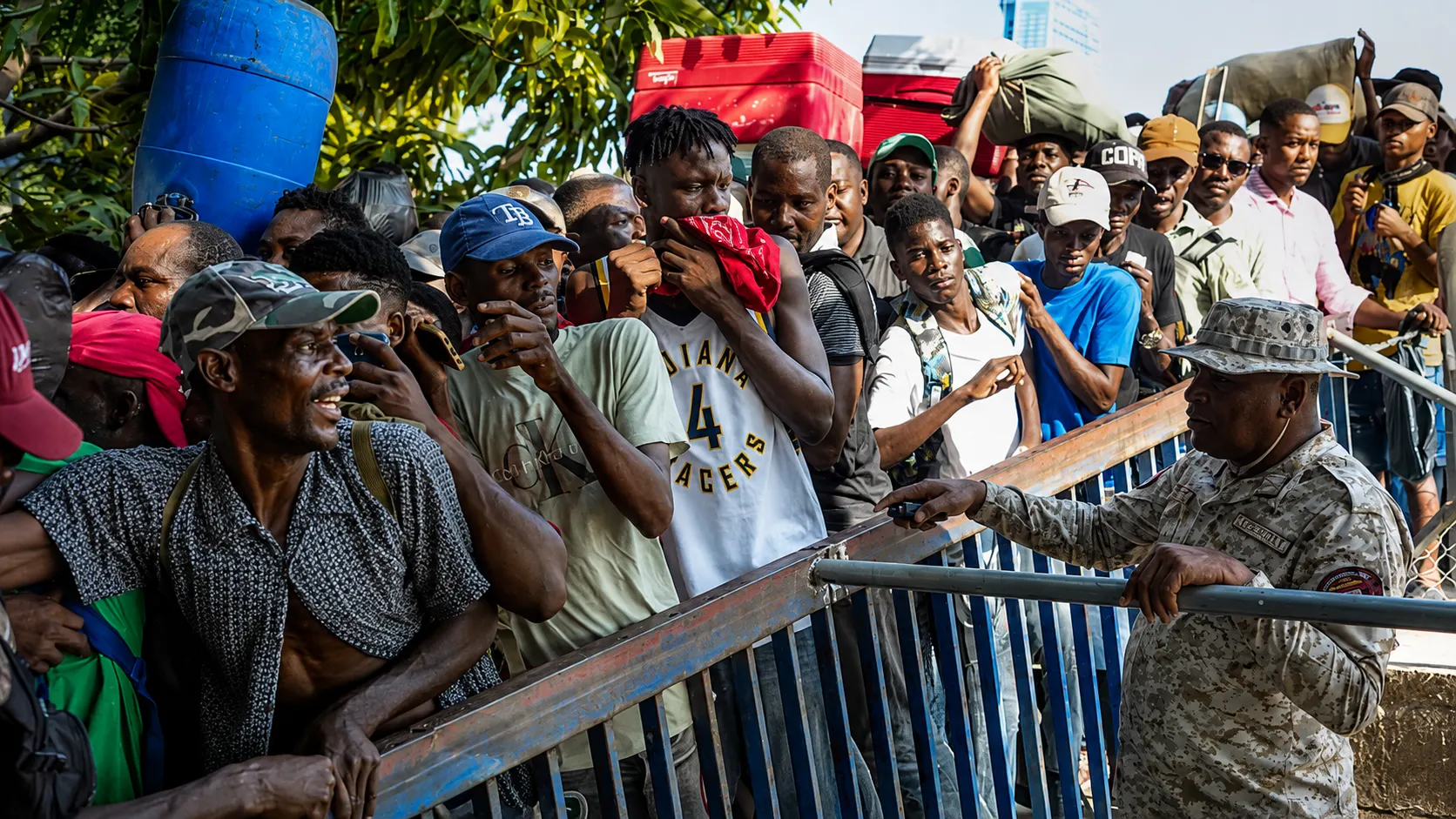
As Haiti buckles under gang control of nearly the entire capital, with almost 1.5million people displaced inside their own country, another crisis has beenbuilding quietly along the eastern border: The Dominican Republic’s deportationof Haitians has not slowed down. It has accelerated.
According to a report published in early August 2026 by the Groupe d’Appui aux Rapatriés et Réfugiés (GARR), a Haitian organization that has spent decades tracking migration flows affecting Haitians, through advocacy, research, and community support programs, Dominican authorities deported 140,018 people from the Dominican Republic to Haiti during the first six months of 2026. Add another1,702 people deported from other migration hubs in the region, and the total climbs to 141,720, a clear increase over the same period last year, when127,909 people were expelled. That works out to an average of more than 23,000 people deported every month, or roughly 780 people every single day !
GARR alsotracked a troubling pattern at sea. Over the same six months, the organization recorded nearly ten interceptions of migrant vessels in Caribbean waters carrying a notable number of Haitians. The largest took place in June in the waters off Turks and Caicos, where one boat was carrying 240 Haitian citizens, peoplewho took to the water precisely because the land route across the Dominican border has grown harder and more dangerous by the month. Interceptions ofHaitians attempting to cross into the Dominican Republic, by land and by sea,have intensified as well, according to the same report, a sign that desperation isn’t just pushing people to leave Haiti, but pushing them toward increasingly risky routes to do it.
A report that puts aface on the numbers
But statistics only tell part of the story. In the same week GARR published this data, another incident illustrated exactly what these deportations look like onthe ground. On July 23, 2026, GARR issued a press statement condemning a video that had gone viral on social media: two Dominican migration agents seen speeding away on a motorcycle, dragging a barefoot, visibly terrified Haitian migrant along with them, a maneuver that put his physical safety at risk with what GARR described as total disregard for his human dignity. The incident tookplace in the province of San Juan de la Maguana, according to reporting fromthe Dominican newspaper Diario Libre.
GARR was blunt in calling this pattern “unfortunately recurring” during operations carried out by migration agents who, the organization said, act however they choose, outside any protocol, with total impunity. GARR describedthe Dominican Republic’s migration policy as racist, xenophobic, and fundamentally targeted at Haitian migrants. a policy that, in the organization’s assessment, enables and feeds these rights violations without consequence.
A broken country receiving people it can’t yet support
Haiti’s owncrisis helps explain why people keep taking irregular, often dangerous routesout of the country, even knowing the rights violations that await many of themon the other side of the border. UN Secretary-General António Guterres reported that more than 2,300 people were killed and 1,100 injured in Haiti during justthe first half of 2026 amid ongoing gang violence. Nearly 1.5 million people are displaced inside their own country, while roughly 6.4 million need humanitarian assistance to survive. Armed gangs control more than 80 percent of the capital,Port-au-Prince.
It is into this collapse that thousands of Haitians, people who had sought refuge acrossthe border, are forced back every week. That reality “continues to weaken the living conditions” of deportees and “further complicates thehumanitarian situation” at the reception points where they arrive inHaiti, according to GARR.
Amid all ofthis, GARR isn’t only documenting the crisis, the organization is calling for concrete action. In a press conference held, Tuesday, in their local, GARR urged Haitian authorities, to take these cases more seriously, because, in GARR’s view, the dignity of every Haitian citizen is at stake.
Morebroadly, GARR is calling on both countries to enter into structured talks onmigration, in order to update the terms of the 1999 bilateral repatriation protocol, an agreement now nearly three decades old, even as the migratory reality between two nations sharing the same island has changed dramatically since it was signed.
As timepasses, the numbers keep climbing, the videos keep circulating on social media, and every day, more than 700 Haitians are sent back, out of a country that never truly welcomed them, and into another where life itself has become dangerous.